Beavers are remarkable semi-aquatic mammals known for their powerful teeth, webbed hind feet, and broad, flat tails. The North American beaver (Castor canadensis) is widely found across the United States and Canada, where it lives around streams, rivers, ponds, and wetlands. Beavers are primarily herbivores, feeding on vegetation, bark, twigs, and roots. They are also well adapted to life in the water, using their swimming abilities and underwater entrances to their lodges for protection from predators. National Park Service

What makes beavers especially fascinating is their ability to transform the landscape. By cutting trees and arranging branches, grasses, rocks, and mud, they build dams that slow streams and create ponds. These ponds can become valuable wetlands that provide habitat for fish, birds, amphibians, insects, and other wildlife. Because their engineering activities can influence entire ecosystems, beavers are often described as “ecosystem engineers” and keystone species. Beaver dams can also slow water movement and allow sediment to settle, helping shape and maintain wetland environments. National Park Service
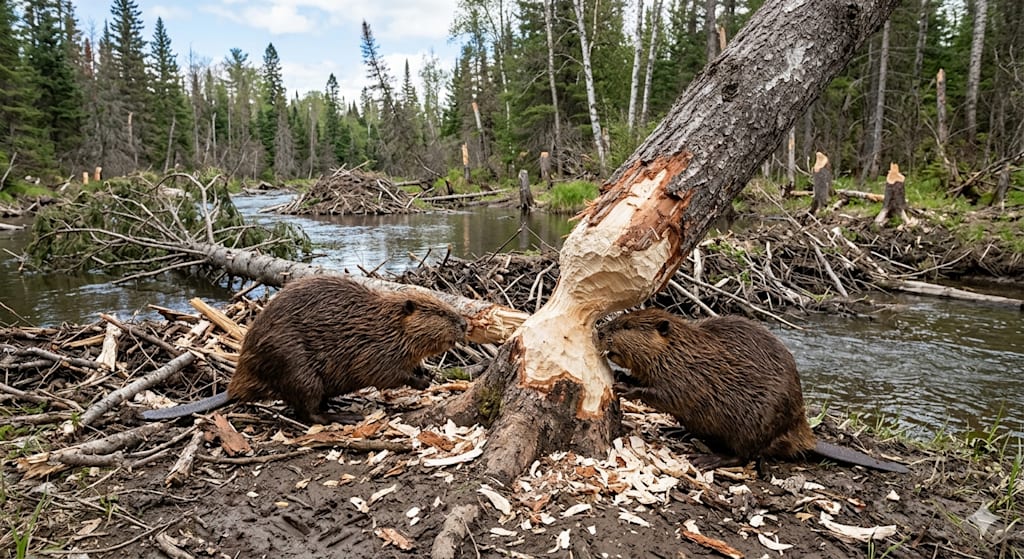
Beyond their fascinating behavior, beavers demonstrate how one species can have a powerful effect on the natural world. Their dams create wildlife corridors, expand wetland habitat, and alter water flow in ways that can benefit many other species. Watching a beaver gather branches, swim through a pond, or carefully maintain its dam offers a glimpse into one of nature’s most impressive examples of animal engineering.
Comments
Post a Comment