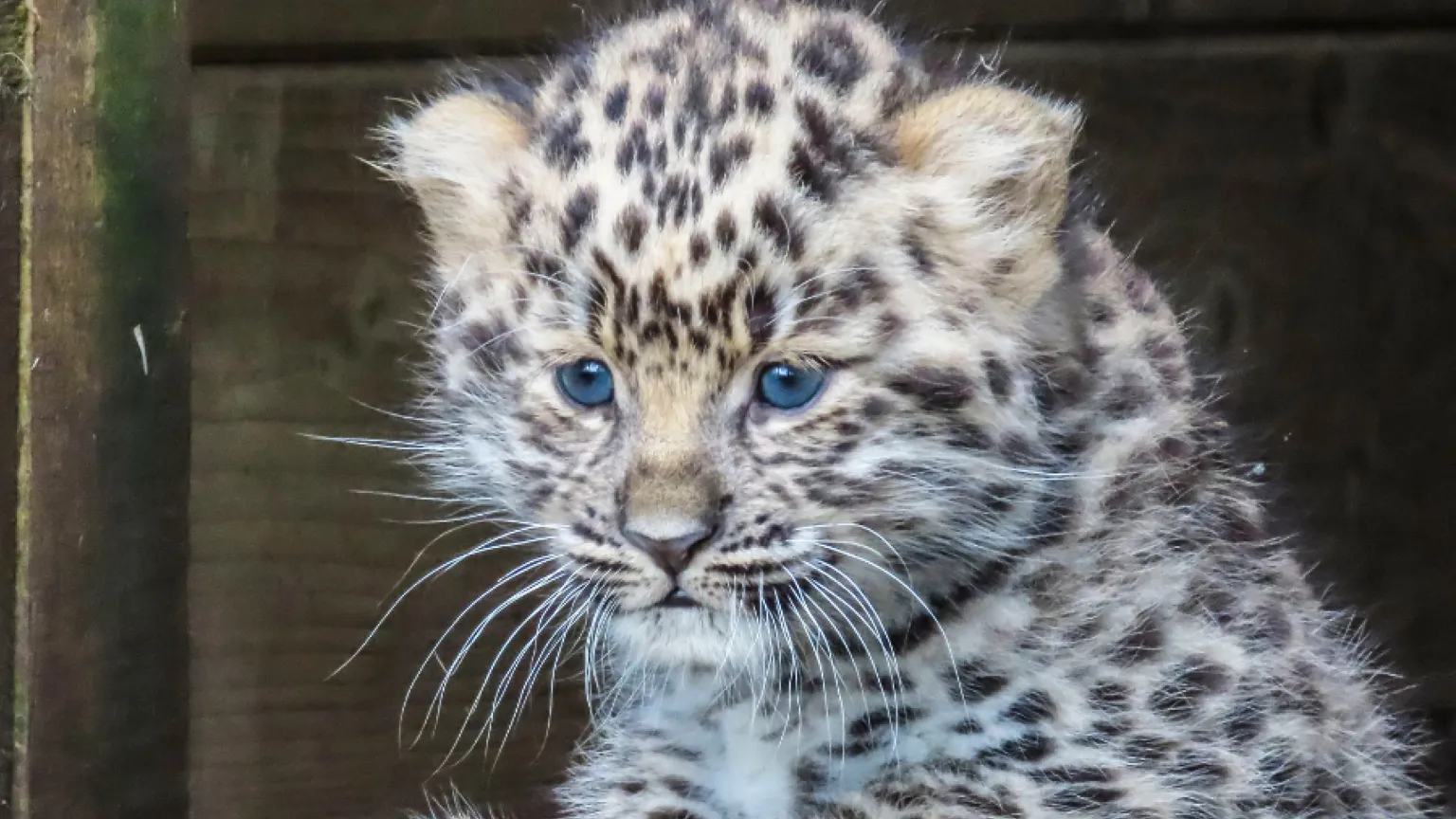
A rare and critically endangered Amur leopard cub has captured the hearts of visitors after making her first public appearance at Dartmoor Zoo in Devon. The milestone comes as a significant moment for conservationists working to protect one of the world’s rarest big cats.
 Born on 29 September 2025 to the breeding pair Freddo and Lena, the cub was named Zeya, after the River Zeya in eastern Russia, which lies within the species’ natural habitat. With only around 120 Amur leopards left in the wild, and fewer than 15 born globally in 2025, Zeya represents a vital addition to the survival of this endangered species.
During her earliest weeks, Zeya remained under close observation, receiving regular veterinary care and bonding time with her mother. Recently, she was moved into the main leopard habitat, allowing the public to witness her playful curiosity and gentle interactions with Lena. Zoo staff are asking visitors to remain calm and quiet, ensuring the cub continues to feel safe as she explores her new surroundings.
Keepers report that both mother and cub are healthy and active, with Zeya already showing the natural instincts that will serve her well as she grows. Her public debut offers visitors a rare glimpse into the early life of one of the planet’s most elusive big cats.
Born on 29 September 2025 to the breeding pair Freddo and Lena, the cub was named Zeya, after the River Zeya in eastern Russia, which lies within the species’ natural habitat. With only around 120 Amur leopards left in the wild, and fewer than 15 born globally in 2025, Zeya represents a vital addition to the survival of this endangered species.
During her earliest weeks, Zeya remained under close observation, receiving regular veterinary care and bonding time with her mother. Recently, she was moved into the main leopard habitat, allowing the public to witness her playful curiosity and gentle interactions with Lena. Zoo staff are asking visitors to remain calm and quiet, ensuring the cub continues to feel safe as she explores her new surroundings.
Keepers report that both mother and cub are healthy and active, with Zeya already showing the natural instincts that will serve her well as she grows. Her public debut offers visitors a rare glimpse into the early life of one of the planet’s most elusive big cats.
 For conservationists, Zeya’s arrival highlights the importance of captive breeding programs. Every successful birth contributes to the genetic diversity and long-term survival of the species, which faces ongoing threats from habitat loss, poaching, and human encroachment. Programs like Dartmoor Zoo’s play a critical role in ensuring the Amur leopard’s future, bridging the gap between wild populations and carefully managed conservation efforts.
Zeya’s first public appearance is not just a moment of joy for zoo visitors; it is a symbol of hope for the survival of the Amur leopard, demonstrating the impact dedicated conservation work can have on some of the world’s most endangered wildlife.
For conservationists, Zeya’s arrival highlights the importance of captive breeding programs. Every successful birth contributes to the genetic diversity and long-term survival of the species, which faces ongoing threats from habitat loss, poaching, and human encroachment. Programs like Dartmoor Zoo’s play a critical role in ensuring the Amur leopard’s future, bridging the gap between wild populations and carefully managed conservation efforts.
Zeya’s first public appearance is not just a moment of joy for zoo visitors; it is a symbol of hope for the survival of the Amur leopard, demonstrating the impact dedicated conservation work can have on some of the world’s most endangered wildlife.
Comments
Post a Comment